Pure Lucia, Night 2: Duende Otherness — Program Notes
Program notes written and annotated by Dustin Hurt
This is the complete program for Pure Lucia – Night 2: Duende Otherness, presented by Bowerbird on Saturday, May 10, 2025 at FringeArts in Philadelphia, as part of Pure Lucia: The Life and Work of Lucia Dlugoszewski in the composer’s centenary year. It includes the running order and Dustin Hurt’s program notes, with archival documentation alongside the text.
Program
Performed by Either/Or
– Christa Van Alstine, clarinets
– Tiago Linck, trumpet
– Matt Melore, bass trombone
– Lauren Cauley, violin
– Russell Greenberg, percussion
– Chris McIntyre, conductor
Performed by Peter Evans, trumpet
I: Sun Setting
IV: Moon With Clouds
VII: Bears – Deep Midnight
V: Long Comet Hair
Performed by Arcana New Music Ensemble
– Jonathan Leeds, clarinet
– Molly Germer, violin
– Ju-Ping Song, timbre piano
– Andy Thierauf, percussion
Intermission
Performed by Agnese Toniutti, timbre piano
KATHERINE DUKE
For string quartet and five dancers; Music by Dlugoszewski; choreography *Elusive Pierce* by Katherine Duke. Art work by Preston Douglas Boyer (video production by Michele Anderson)
Performed by the Erick Hawkins Dance Company
– Jason Hortin
– Hayley Meier
– JR Gooseberry
– Halie Landers
– Rylee Lucero
and
Daedalus Quartet
– Min-Young Kim, violin
– Matilda Kaul, violin
– Jessica Thompson, viola
– Thomas Kraines, cello
Program Notes
Written and annotated by Dustin Hurt
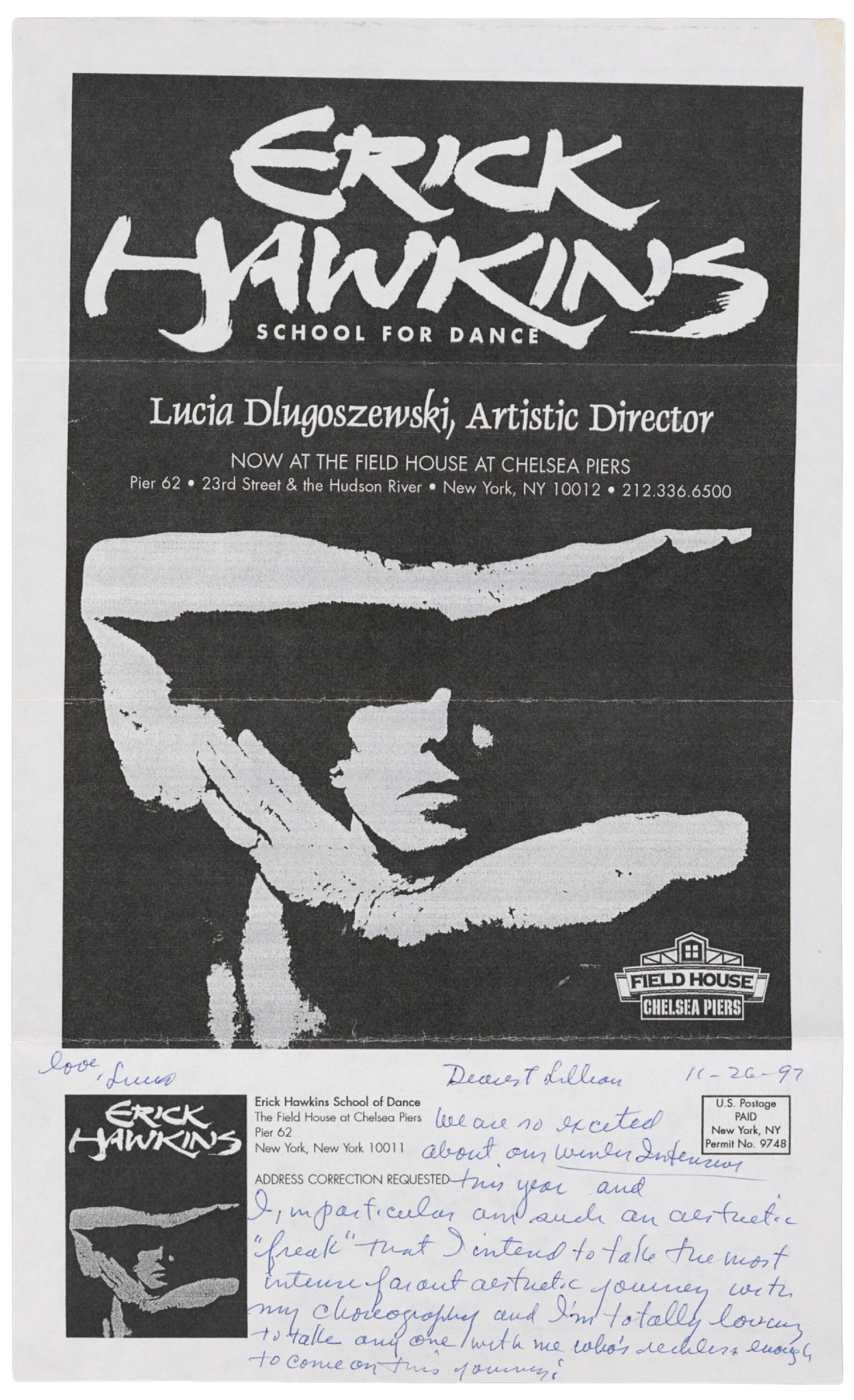
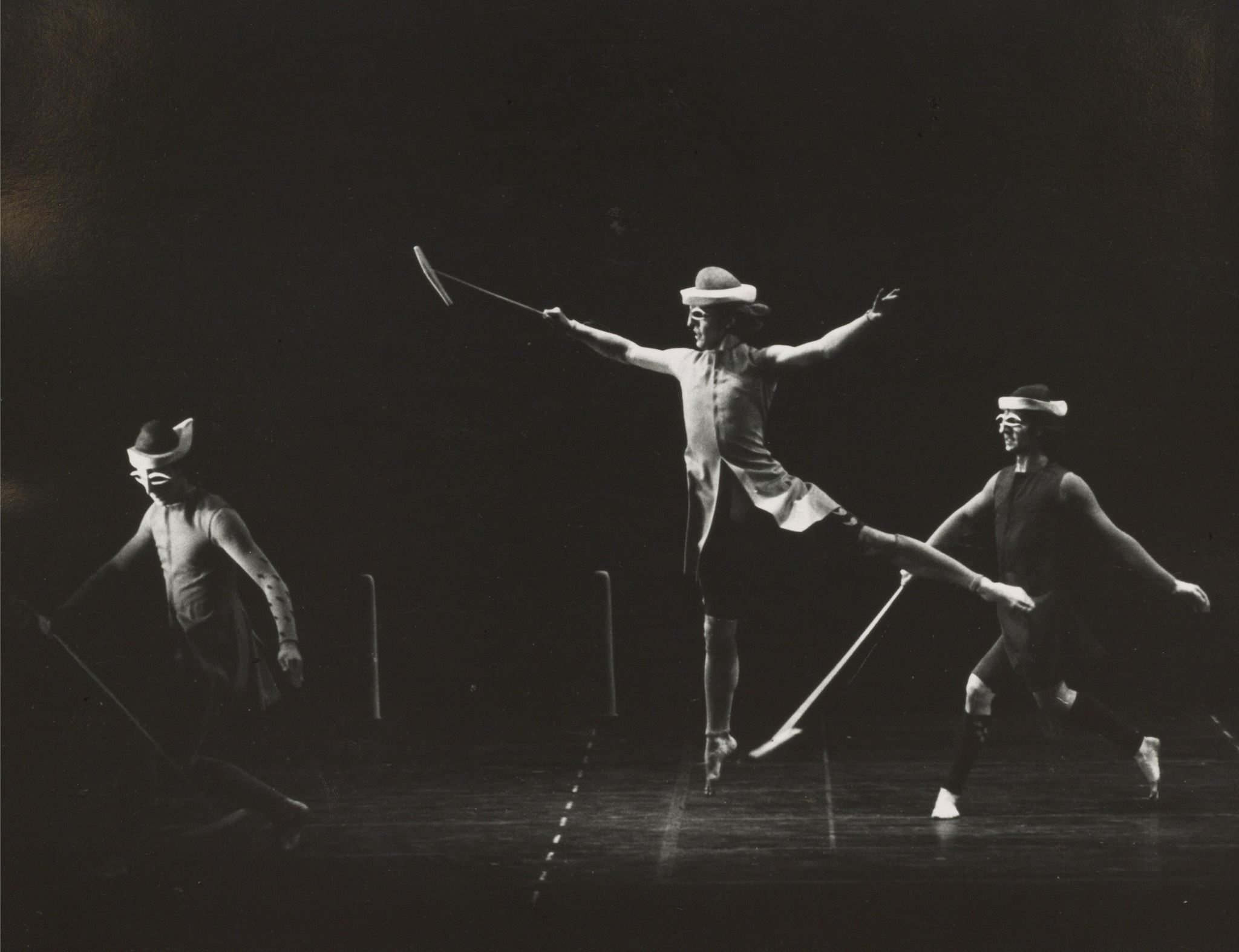
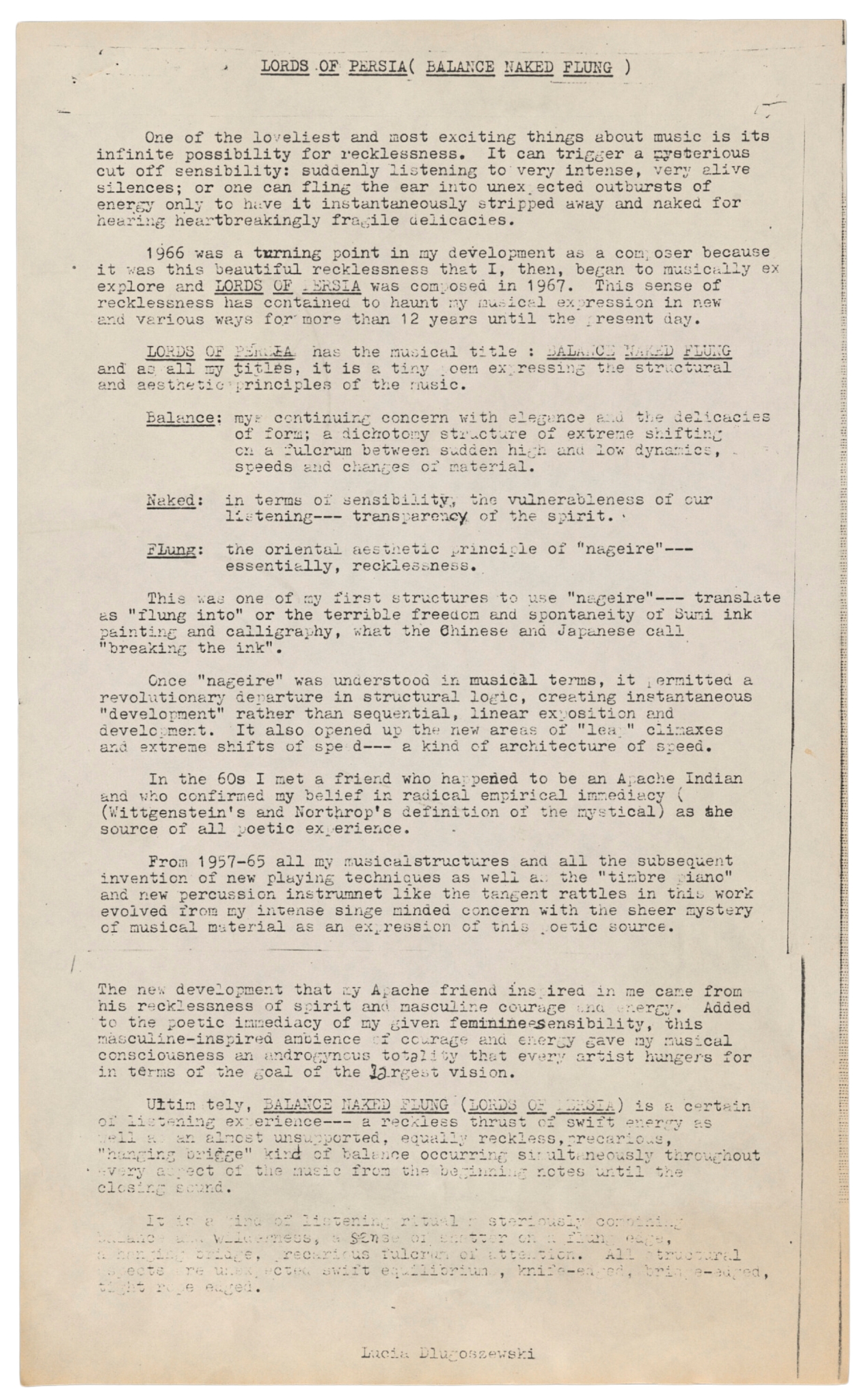
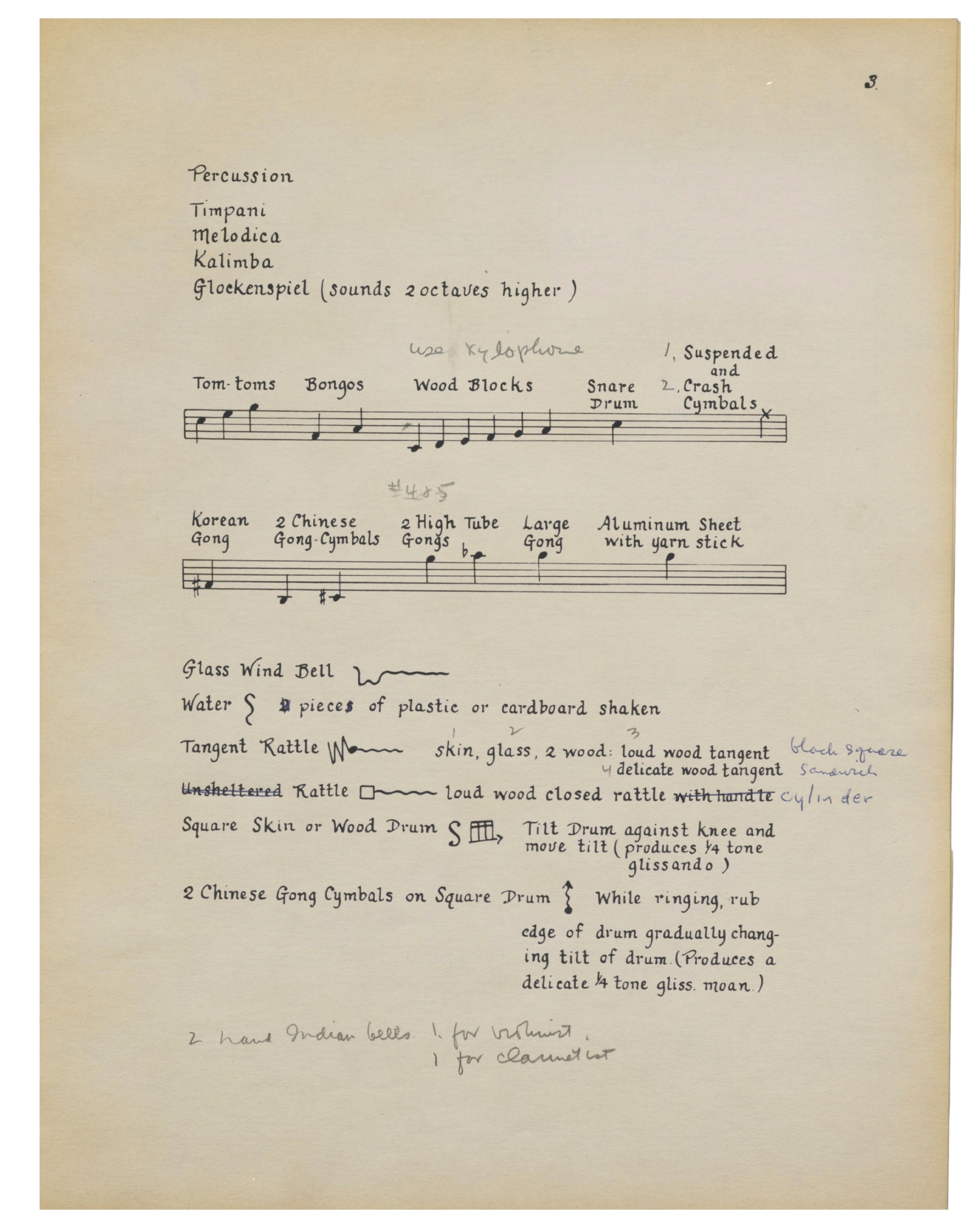
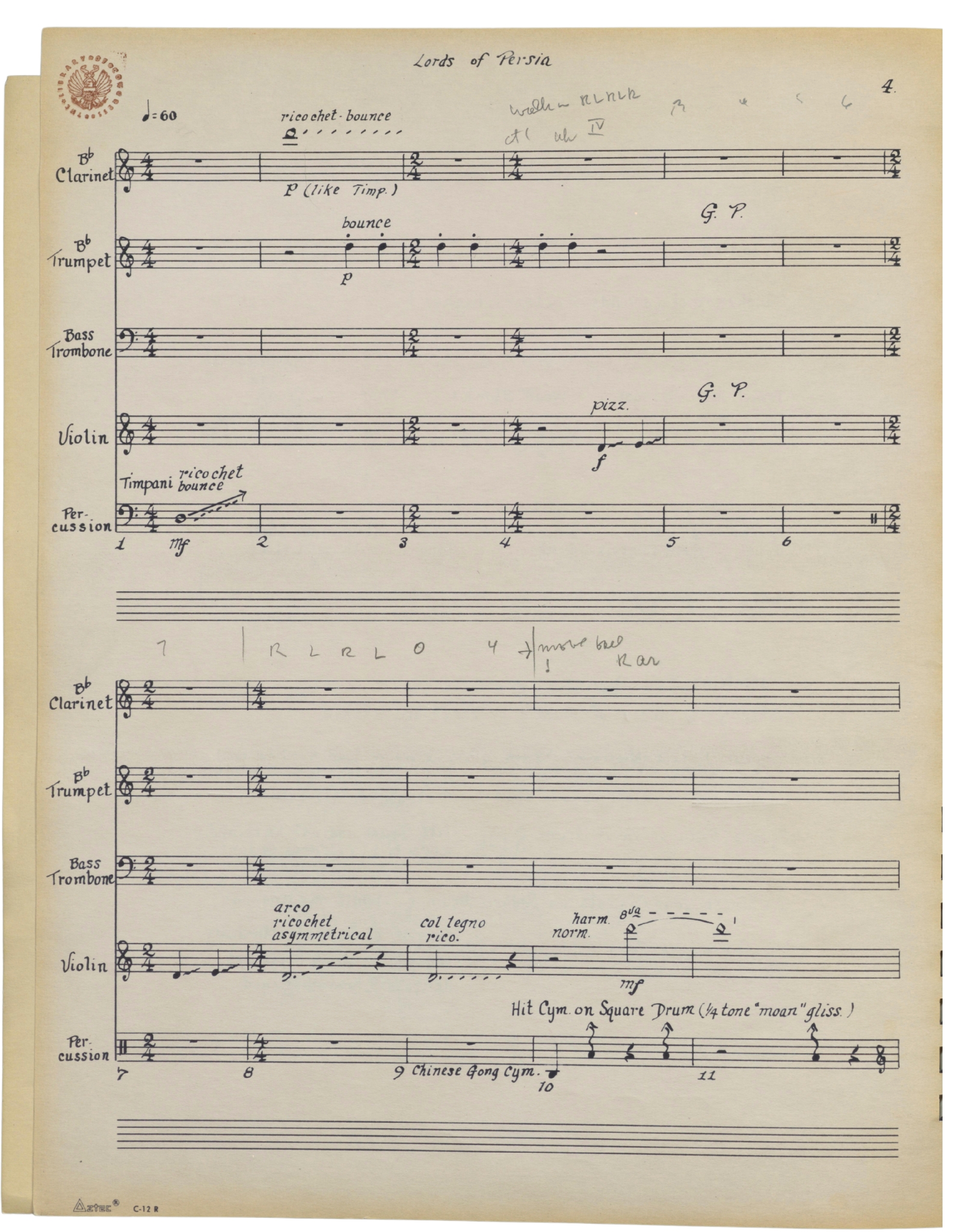
Lords of Persia premiered in July 1965 at the American Dance Festival in New London, Connecticut. The choreography by Erick Hawkins featured four male dancers wielding staffs in a stylized evocation of polo—a sport with historical roots in ancient Persia. Lucia Dlugoszewski’s music is scored for clarinet, trumpet, bass trombone, violin, and one percussionist who plays an array of instruments—both traditional and invented. The invented percussion includes Dlugoszewski’s own creations such as “tangent rattles,” “square drums,” and what she called “waters,” a percussive use of cardboard to evoke fragile or fluid sonic textures. The score is one of her most fully notated surviving works: carefully copied, professionally bound, and unusually complete—though interpretive questions remain, particularly in the percussion part. The music itself is dense and taut, packed with glissandi, ensemble trills, and passages of striking rhythmic unity that are abruptly punctuated by silence or sudden directional shifts.
Balance Naked Flung, Dlugoszewski’s alternate (or musical) title for the piece, serves as what she called a “tiny poem,” a phrase that encapsulates the work’s structural and aesthetic logic. “Balance” signals a tension between extremes—loud and soft, rapid and still. “Naked” speaks to a vulnerability in the act of listening. And “Flung” refers to “nageire,” a Japanese term associated with a style of ikebana (the art of flower arrangement) that emphasizes spontaneity and natural placement—flowers are thrown in without the use of a structured base or formal plan, evoking immediacy, asymmetry, and intuitive gesture. As an aesthetic concept, it became central to her approach, opening a path away from traditional exposition and toward sudden leaps in thought and sound, what she once described as an “architecture of speed.”
In later writings, Dlugoszewski described the piece as “springtime music… a constant nageire,” situating it within a lineage of works that favored sensation over sentiment. She echoed the language of an earlier solo composition titled The space of March and April and May has turned the world on its tender side and we have to turn the same way, drawing a poetic continuity between the two. Though composed midstream in her long creative partnership with Hawkins, Lords of Persia quickly found its own footing in concert settings—performed without dance and regarded as one of her key achievements from the 1960s. The piece has since been programmed by numerous contemporary music ensembles and remains one of the most accessible entry points into her instrumental work.
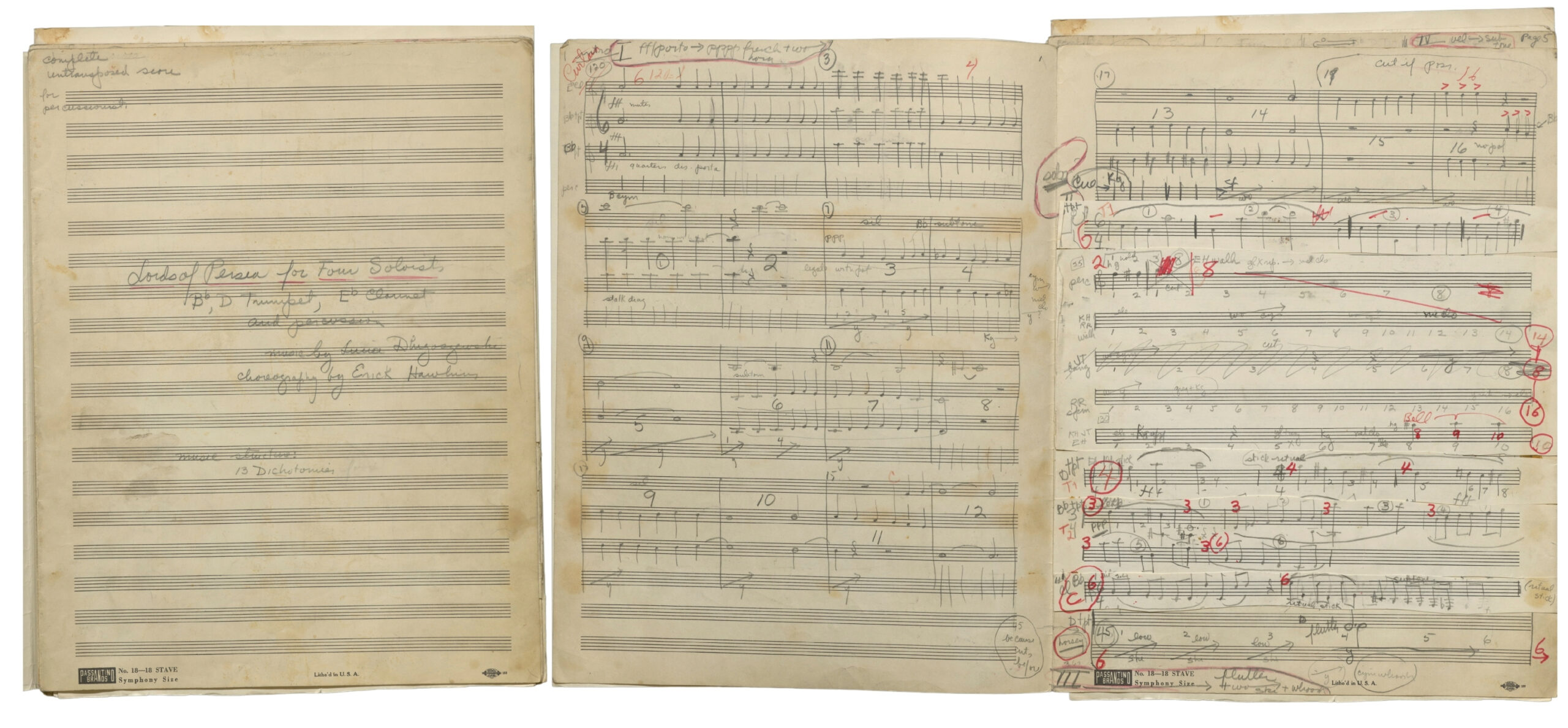
In addition to the widely performed quintet version of Lords of Persia, Dlugoszewski composed another version—presumed to be earlier—also titled Lords of Persia, for the quartet instrumentation of two trumpets, clarinet, and percussion. Despite the shared title, the two pieces are musically unrelated. The earlier version is a fully developed composition, but whether it was ever performed is currently unknown. It survives in manuscript form only and offers further insight into Dlugoszewski’s experimentation with unusual instrumentations and ensemble interplay during the early 1960s.
Dlugoszewski’s Space is a Diamond (1970) remains one of the most blistering and exacting entries in the solo trumpet repertoire. Composed for the virtuoso Gerard Schwarz, the piece emerged at a turning point in Dlugoszewski’s career, as she began to assert a compositional voice increasingly distinct from her long partnership with choreographer Erick Hawkins. If earlier works explored the delicate interplay between music and movement, Space is a Diamond thrusts the trumpet onto a tightrope stretched between fragility and ferocity—”a fragile hanging bridge,” as Dlugoszewski wrote, “spanning the silence of the ear.”
Clocking in at roughly ten minutes, the piece unfolds in a continuous arc of six unnamed sections that leave no room for rest or breath. The music was built around the Japanese aesthetic notion of nageire—”flung into”—and conjures the sensation of flight into perilous heights. The trumpet line spirals across more than four octaves, leaping with breakneck speed between registers and dynamics. Its technical arsenal includes half-valve glissandi, “ricochet” slurs, whisper trills, “percussive bubbles” (created by striking the mouthpiece with the palm), and the particularly demanding “flap tongue”—a sound produced by pushing air with the tongue upward against the teeth, rather than using conventional tonguing.
Central to the composition is a complex choreography of mute changes—seven distinct types are required, including straight, cup, solo tone, whisper, plunger, and both stem-in and stem-out versions of the harmon mute. Dlugoszewski devised a custom notation system to mark each mute, with green symbols for insertion and red for removal. The player must switch mutes in rapid succession, using one hand to maneuver the hardware mid-phrase, all while navigating an intricate web of color-coded and graphically indicated performance gestures. Timbre, for Dlugoszewski, is not an effect but a structural force, carrying the music’s momentum as much as pitch or rhythm.
Space is a Diamond became Dlugoszewski’s first professionally recorded work when Schwarz included it on his 1972 album The New Trumpet (Nonesuch). Lauded by critics and fellow composers alike—William Bolcom noted that it “enters a new sound world”—the piece remains one of her most circulated and celebrated compositions. Despite its modest scale, it epitomizes her radical instrumental imagination and stands as a high-water mark of 20th-century writing for brass.

Black Lake premiered on October 20, 1969, in New York City, as a collaboration between Dlugoszewski and Hawkins. The dance featured seven masked performers and was divided into nine parts, described in Dlugoszewski’s program notes as “metaphors of eight different evocations of the sky at night conveyed through movement, music and costuming.” The musical score, titled The Suchness of Nine Concerts, was scored for clarinet, violin, timbre piano, and extensive percussion.
The music, composed after the choreography, was structured independently and in silence, as Dlugoszewski noted, “as a fresh structure independent of the dance.” Yet it was crafted to reflect each movement “as an opera composer would be aware of each word in a sensitive libretto.” Rather than imitation, the music engages in a wide-ranging counterpoint, often diverging from the dance’s rhythms and shapes. One passage from her notes describes a moment in the “Sun Setting” section where “a searingly wild leap catapults from the base of powerful sound into an eerie disturbing silence that gives sudden new meaning to the movement.”
The score called for considerable use of Dlugoszewski’s invented instruments and techniques. A single violin harmonic might follow a cymbal crash, emerging “magically” out of silence, while timbre piano and percussion operate in discrete sonic layers. She described her approach as engaging “all degrees of consonance and dissonance with the dance movements and often commenting poetically in sound on some individual movements in strange, almost contradictory ways.”
Dlugoszewski provided each musical section with a title derived from Chinese and Japanese aesthetic thought, including terms like p’o (unshaped matter), sabi (emptiness), wabi (talentless rejoicing), and karumi (lightness). “Literal imitation is put aside in favor of poetic essence,” she wrote. “The actuality of the dancer’s person is masked and is at the service of the poetic metaphor.” In another note, she emphasized the role of juxtaposition: “This sound with this movement—the creative dangers of a new philosophy of juxtaposition when Dlugoszewski writes music for Hawkins dance.”

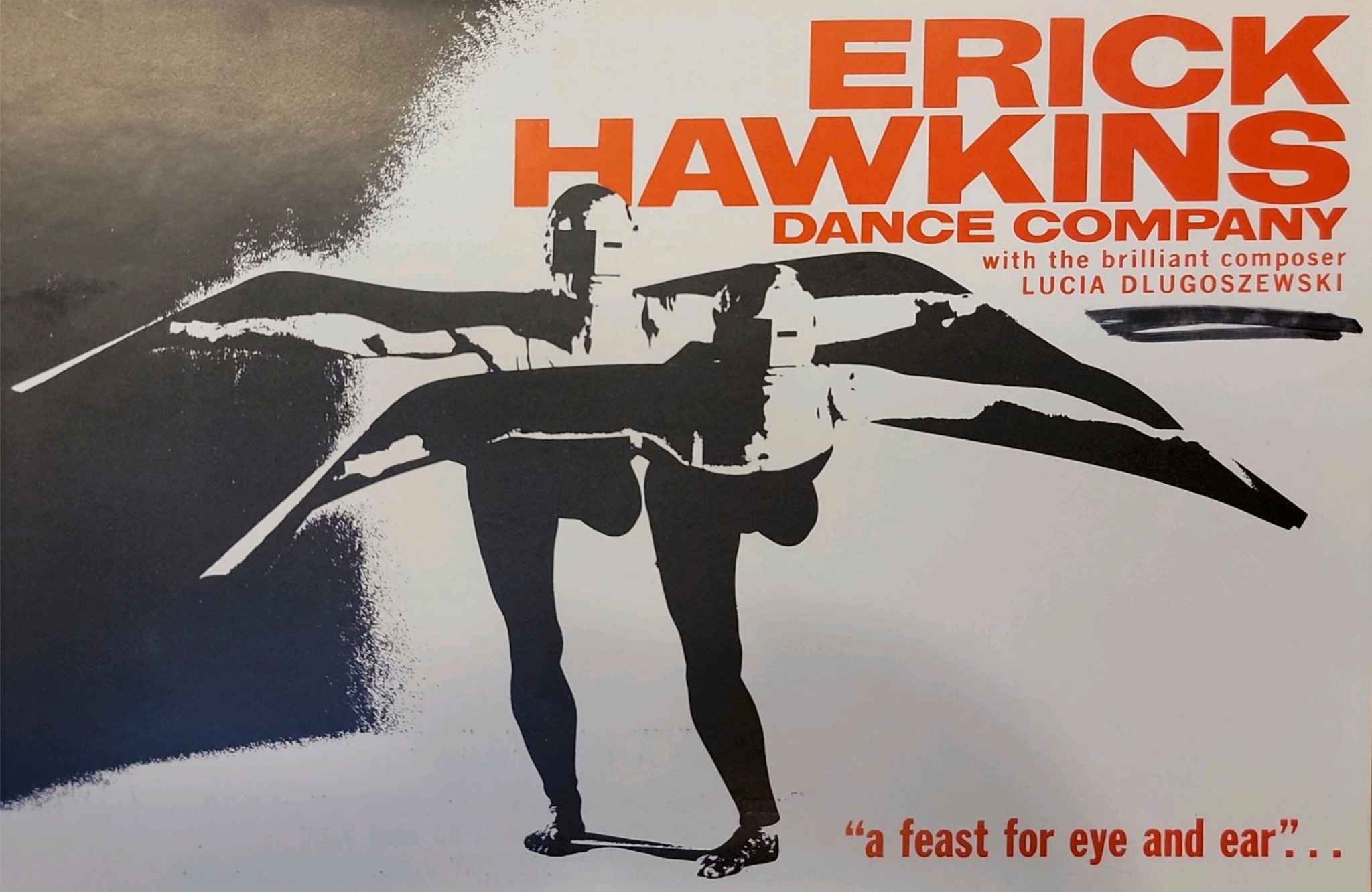
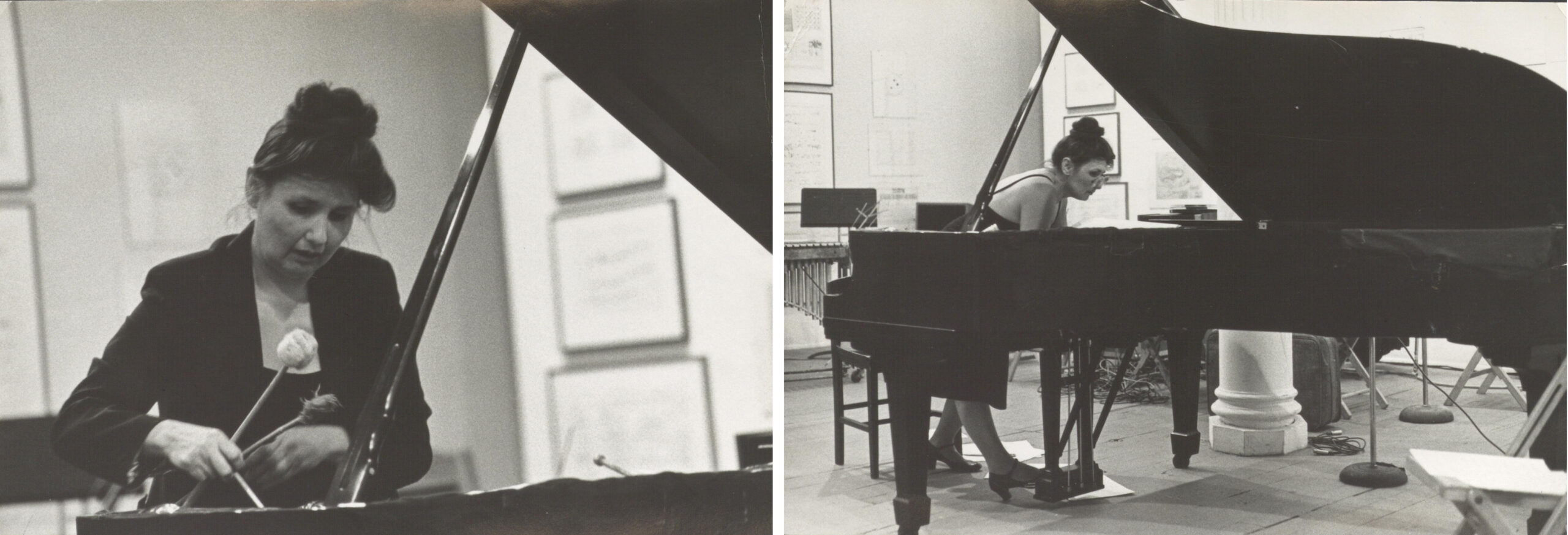
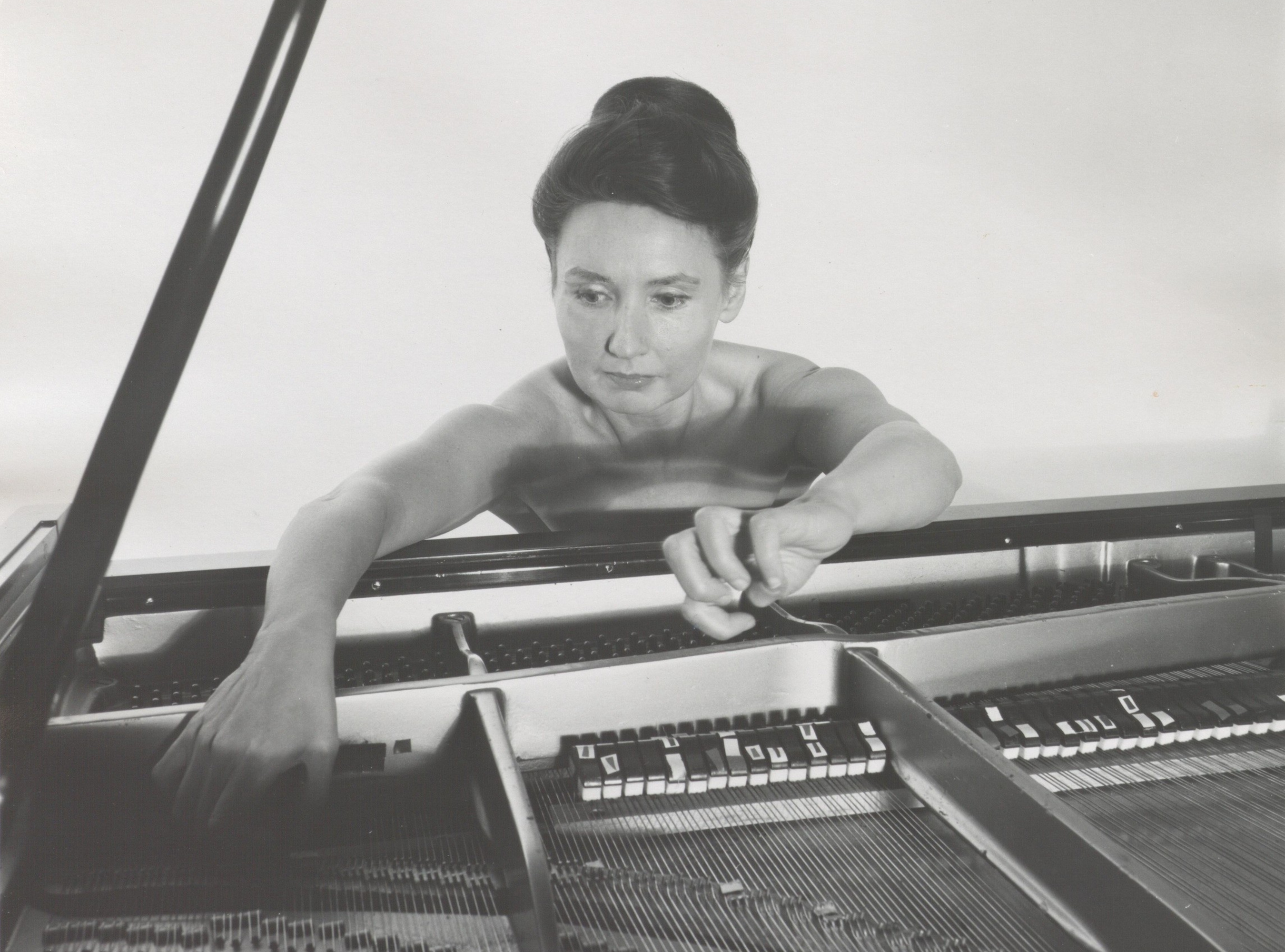
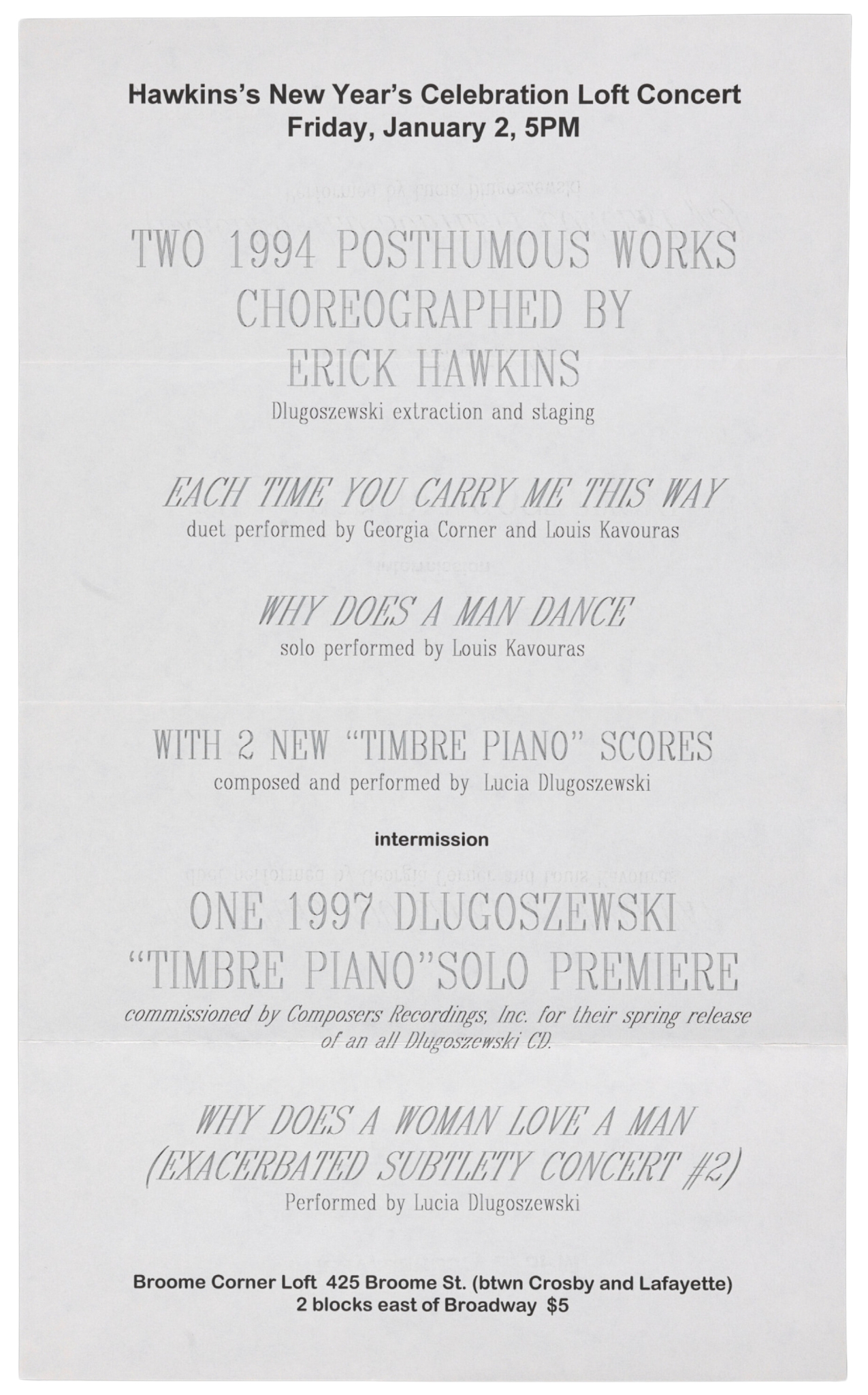
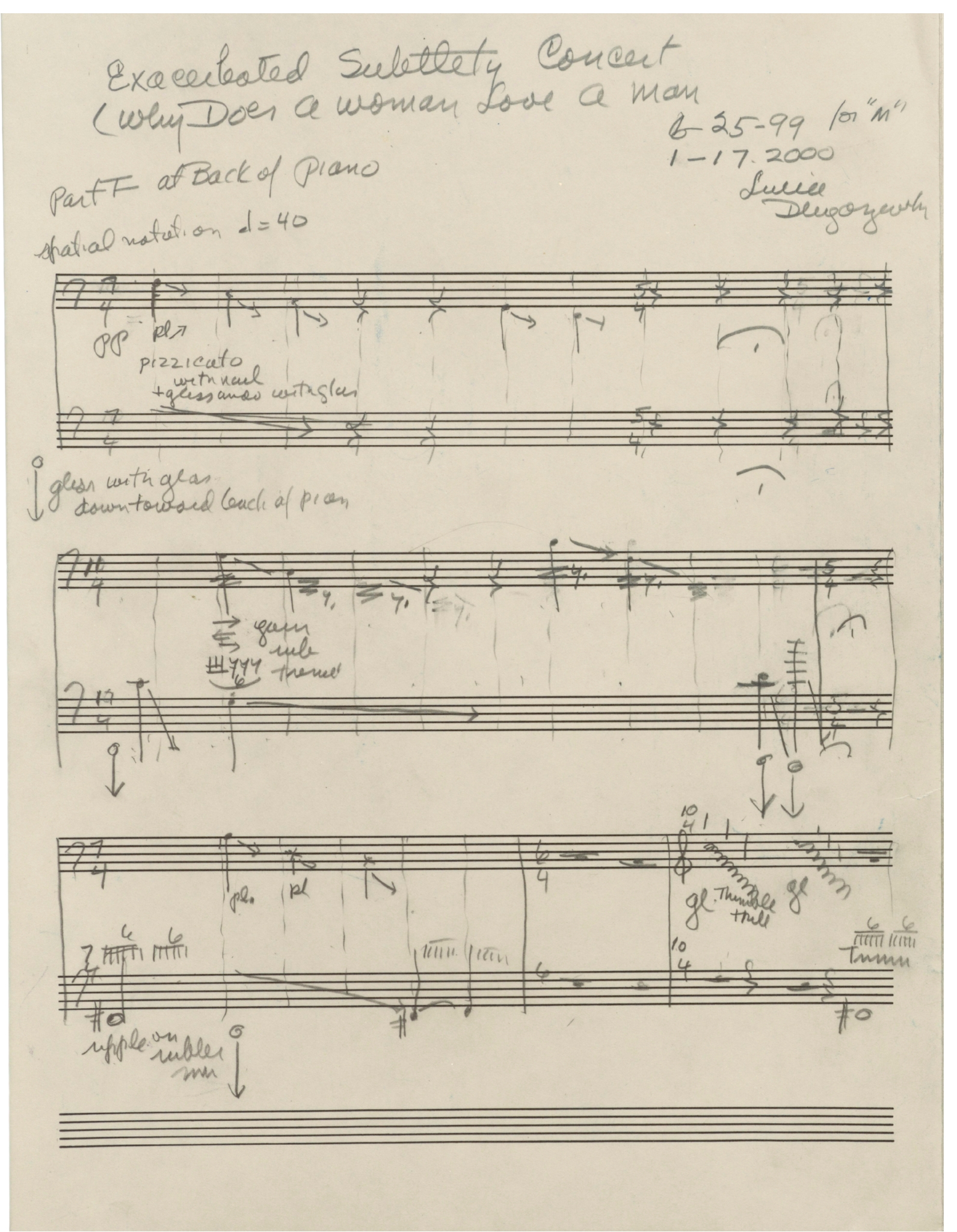
Exacerbated Subtlety Concert (Why Does a Man Love a Woman?) is one of Dlugoszewski’s final works for her timbre piano, composed in 1997, premiered in January 1998, and revised in 2000 for a studio recording session on January 17, produced by Jonathan Schultz. A solo tour de force of preparation and touch, the piece explores what Dlugoszewski called the “elegance of the ungraspable”—a realm where music’s elusive, fleeting nature becomes its most potent expressive force. Reviewers and collaborators noted the exhaustive care she took in preparing the instrument, applying materials such as paper, hairpins, thimbles, baby food jars, rubber wedges, tuning forks, combs, and flexatones to transform the piano into an entirely new percussive world.
In the liner notes for the 2000 recording, Hal Rammel recalls Dlugoszewski describing the opening gestures as “like gentle kisses of foreplay,” emphasizing the work’s mix of delicacy and volatility. Joel Thome, who witnessed the session, remarked that it would be easier to list what wasn’t used on the piano than what was. What emerges is a piece of sharply articulated gestures and subtle transitions, filled with unexpected percussive detonations, shimmering resonance, and finely shaded textures.
The work also featured in Dlugoszewski’s 1999 dance Radical Ardent. Reviewing the performance for the Village Voice, Deborah Jowitt wrote: “The core of Radical Ardent, a series of male-female duets, is sound as a nut, and the music caresses them, deliciously undercutting sweetness with a slightly raucous or abrasive touch.” In the small theater setting, audiences watched “a musician shaking a sheet of paper or tinkling little glass chimes.” Jowitt concluded: “A composer makes a successful beginning as a choreographer. Amazing.”

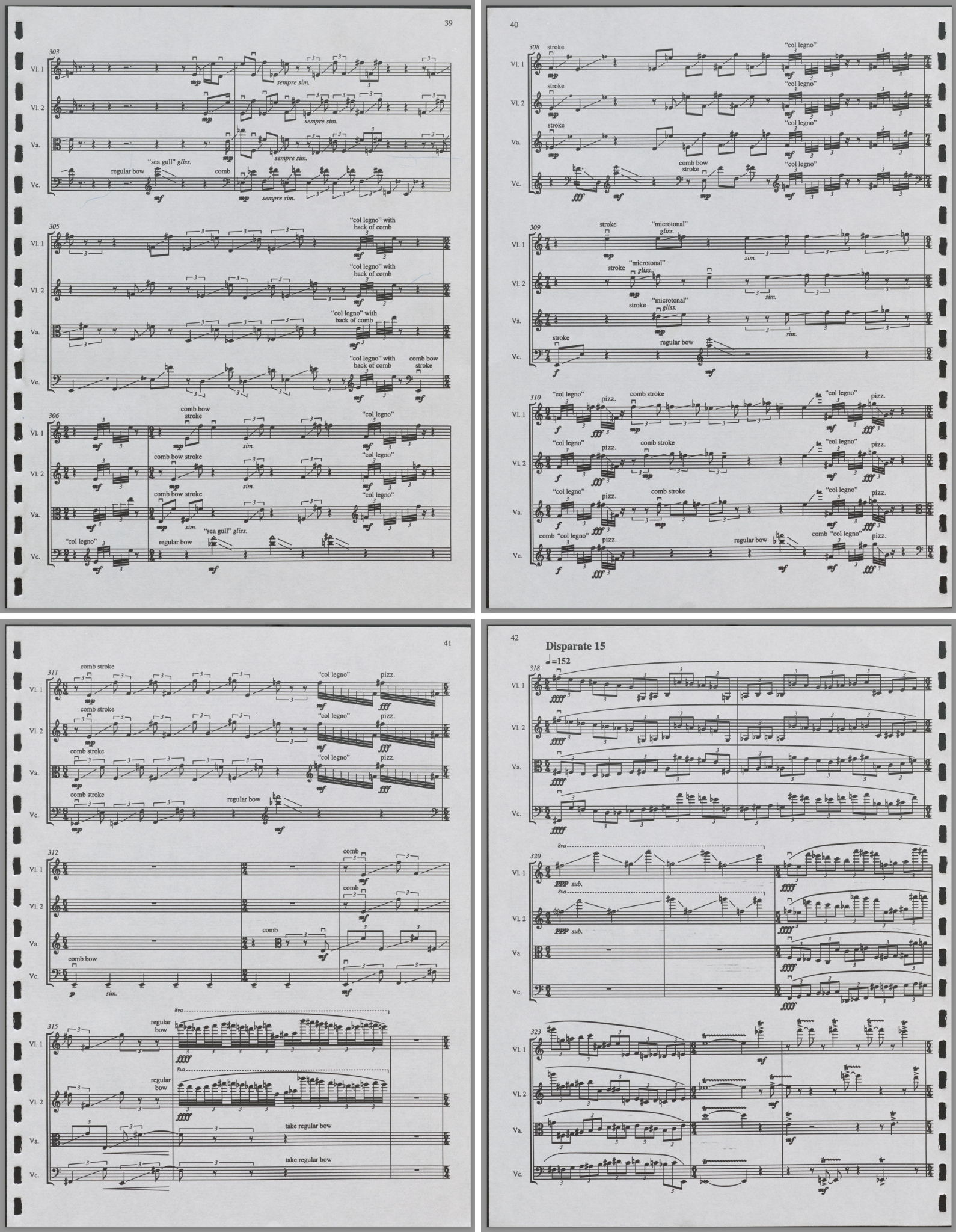
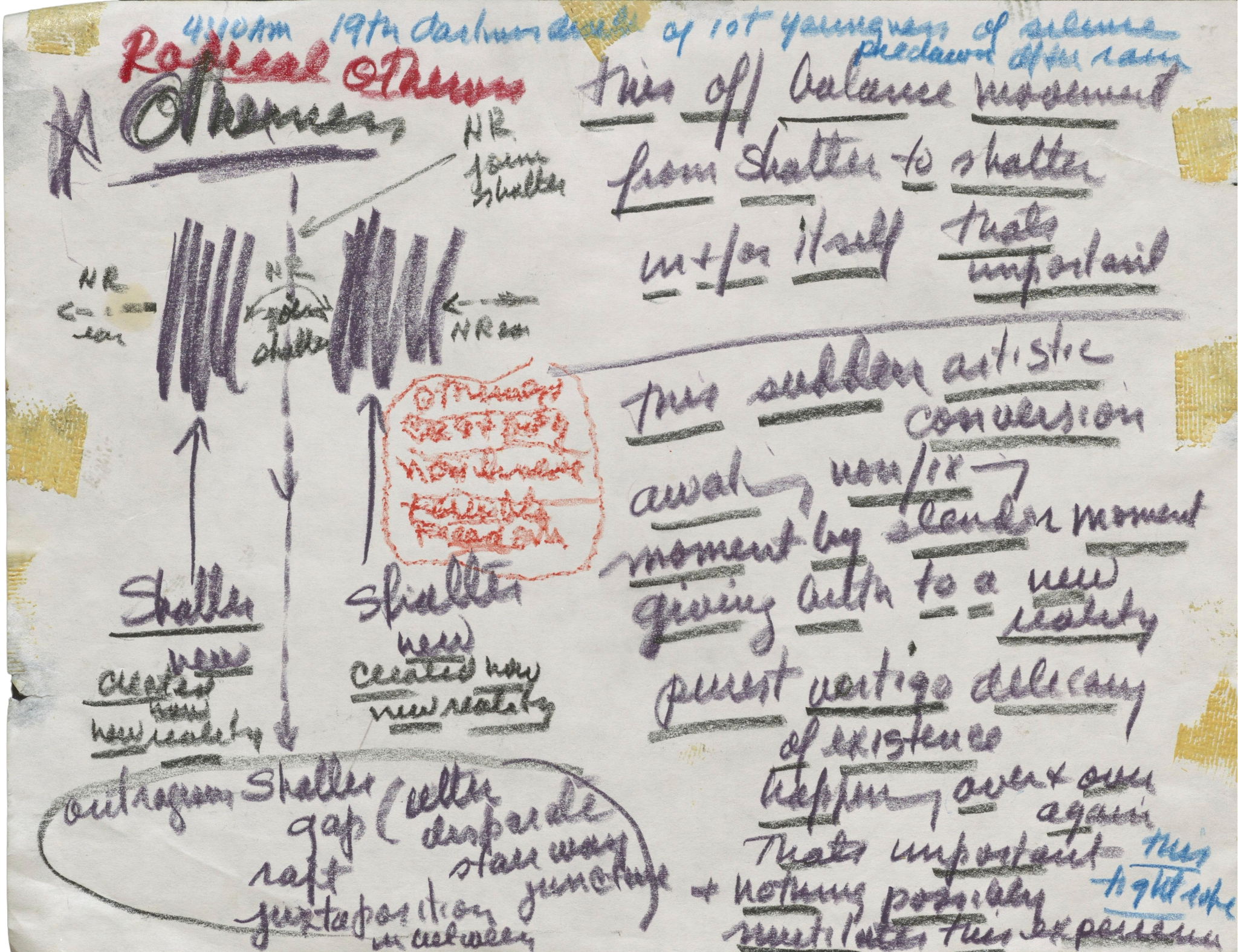
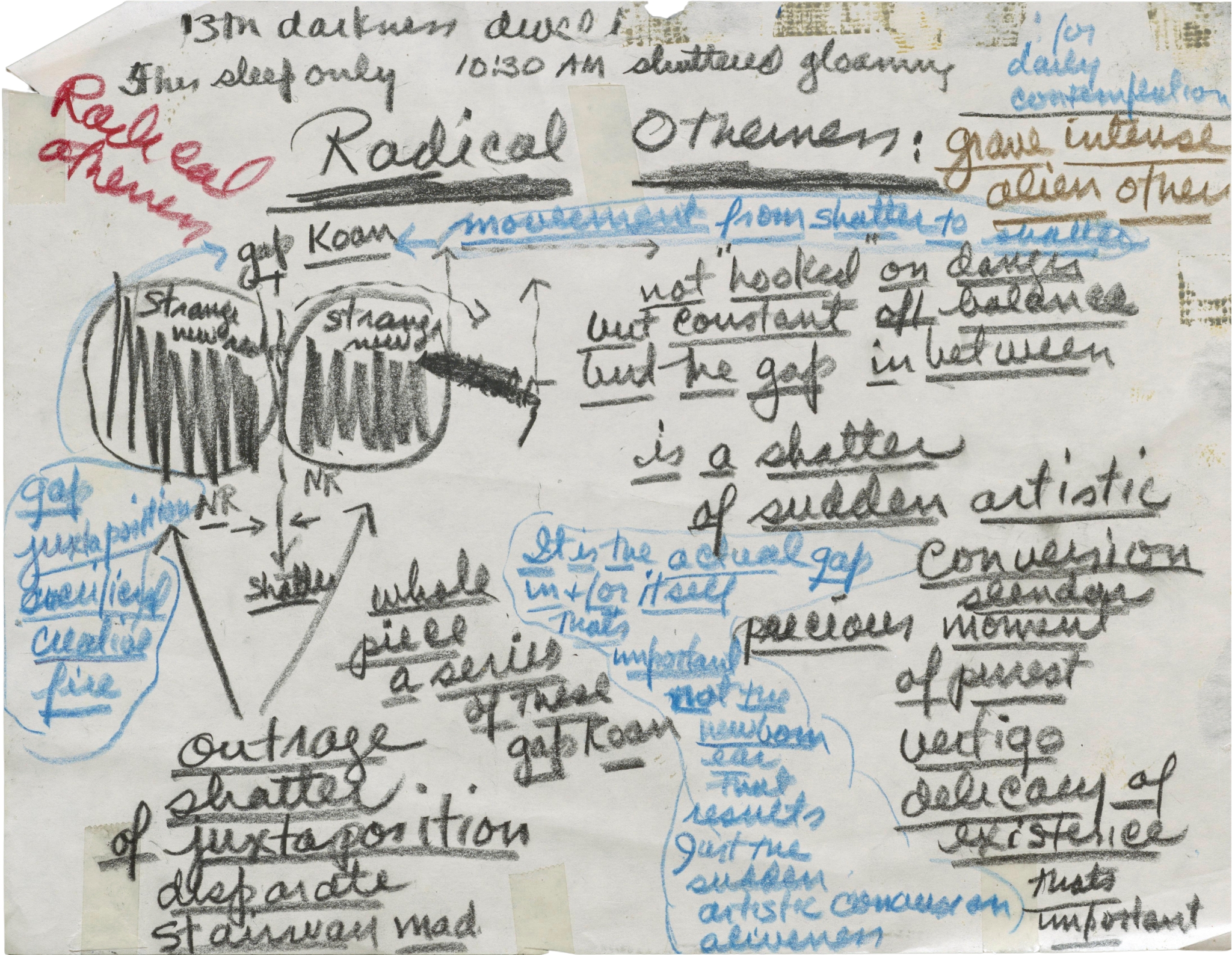
Disparate Stairway Radical Other is a string quartet composed by Lucia Dlugoszewski for Journey of a Poet, the final choreographic work by Erick Hawkins. Although Hawkins passed away in 1994, the choreography was largely complete, and members of his company—including Dlugoszewski and Katherine Duke—worked together to finalize and stage the piece. The work premiered in 1997 at the Brooklyn Academy of Music, performed by the White Oak Dance Project with Mikhail Baryshnikov in the lead role. The score is dedicated to Baryshnikov, Hawkins (in memoriam), and Mary Norton Dorazio (in memoriam).
The music is divided into more than two dozen short, precisely defined sections. Dlugoszewski labeled these “Phrases” and “Disparate,” using them to structure abrupt transitions, dense collisions, and fleeting moments of stillness. This segmented form reflects her concept of the “disparate element”—a compositional strategy rooted in interruption and immediacy. She described the title’s inspiration in visual terms: a stairway in a Japanese building, placed off to the side with no clear function. “It was just there,” she explained. “And I always call it the disparate stairway.”
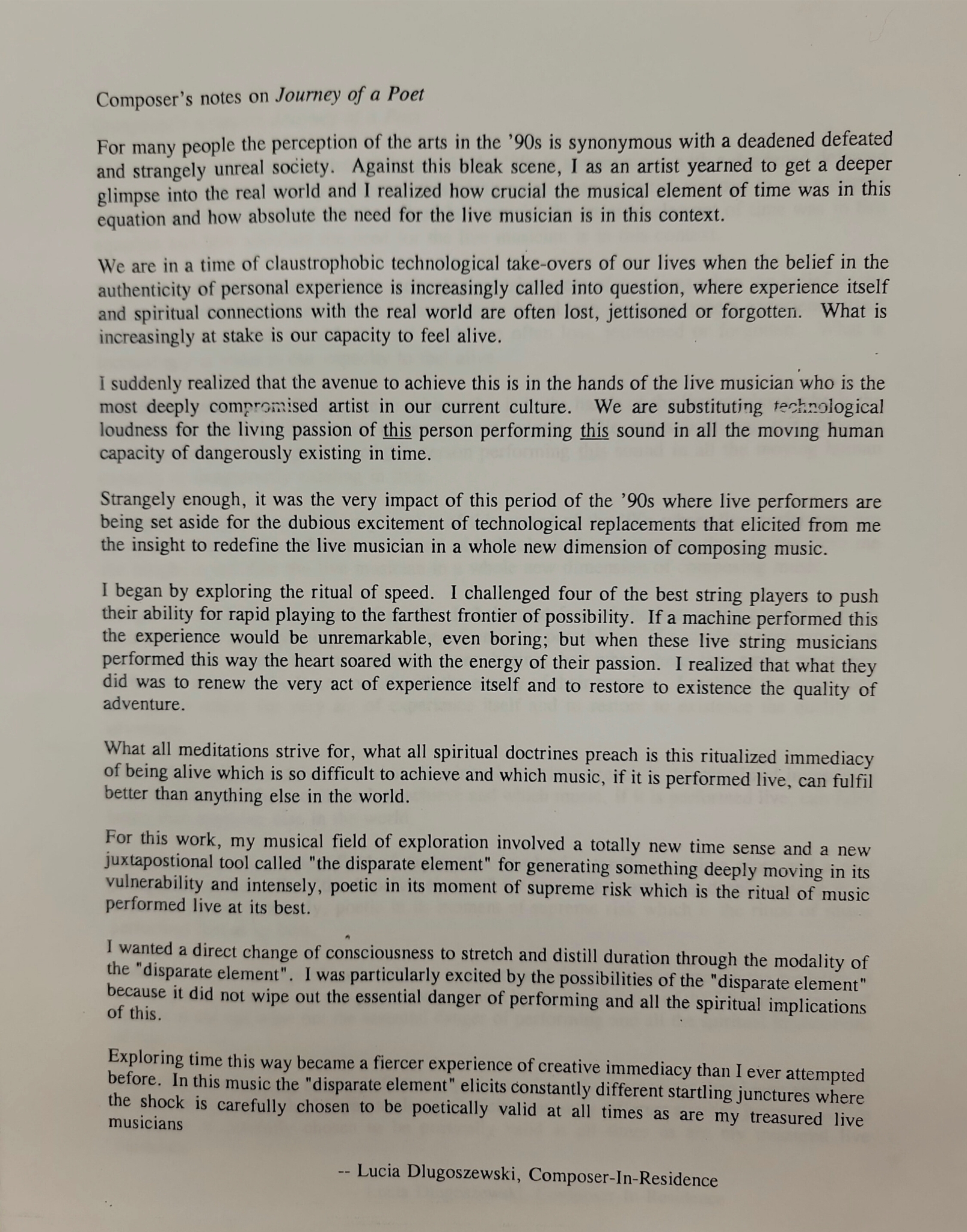
In her composer’s notes, Dlugoszewski wrote in direct response to the cultural climate of the 1990s, which she saw as increasingly dominated by technological surrogates and a loss of authentic experience. She described live musicianship as a necessary act of resistance: a way to confront “claustrophobic technological take-overs” and to restore the possibility of truly feeling alive. She challenged the performers to push their technique to the limits of speed and articulation—not for virtuosity’s sake, but to reassert music as an immediate, physical, and time-bound act. “What all meditations strive for,” she wrote, “what all spiritual doctrines preach is this ritualized immediacy of being alive, which music, if performed live, can fulfill better than anything else in the world.”
The score demands a wide range of extended techniques. Performers use metal thimbles to tap and strum the strings and tailpiece, bow across Swiss combs, and apply glass slides to generate glissandi and koto-like textures. Other instructions call for nail pizzicati, ricochet bowing, glissando trills, and sliding bariolage. One recurring gesture, referred to as a “sea gull glissando,” features narrow, rising slides that dissolve into silence.
Tonight’s performance features Elusive Pierce, a choreography by Katherine Duke, Artistic Director of the Erick Hawkins Dance Company. Duke had worked closely with Dlugoszewski on Journey of a Poet, helping shape movement and counts that would guide the music. She premiered Elusive Pierce in 2005, and revisited the work in 2014, reworking both the choreography and musical pairing. Eventually, she found in Disparate Stairway Radical Other a powerful and instinctive connection. “Primitive instinct arises from the separation of cell from cell, of an animal from its young,” she writes. “Its temporariness recurs, leading to self-reliance and self-realization. Lucia would say: What is most beautiful is what is distantly connected.”