
Revisiting Cornelius Cardew’s Treatise
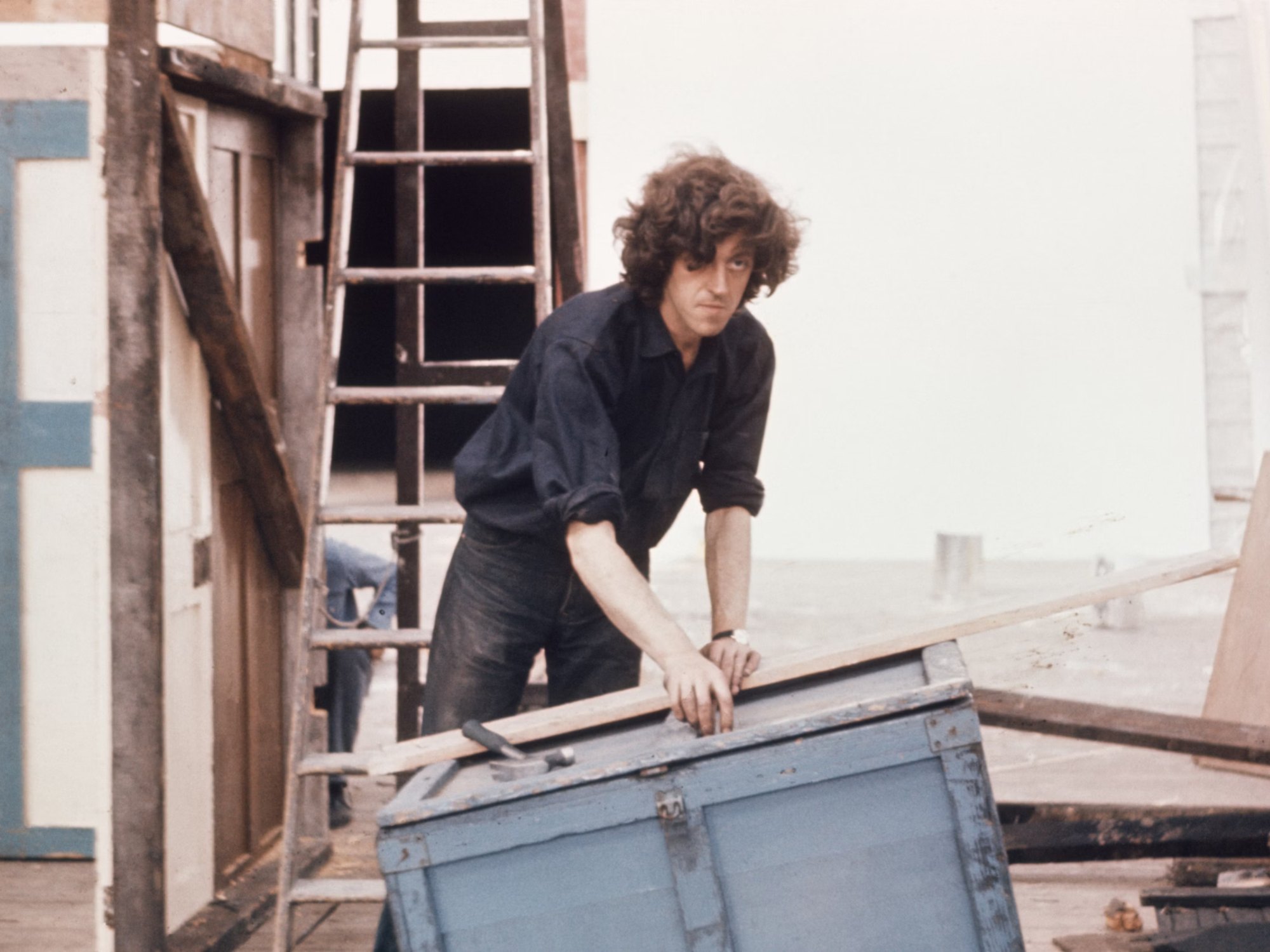
This Friday, November 20, 2026, Arcana New Music Ensemble returns to The Rotunda for a second performance of Cornelius Cardew’s Treatise. Last November, the ensemble performed approximately twenty of the score’s 193 pages; this year, the same six musicians take on a different selection.
Much of the discourse around indeterminate music emphasizes the differences between performances, but hearing the same musicians return to a work raises an equally interesting question: what carries over from one realization to the next? In a work like Treatise, where the relationship between notation and sound is not prescribed, what develops over successive performances is not necessarily a more refined rendering of the musical material, but a more developed collective practice of interpretation.
On the Performance of Treatise
By Dustin Hurt
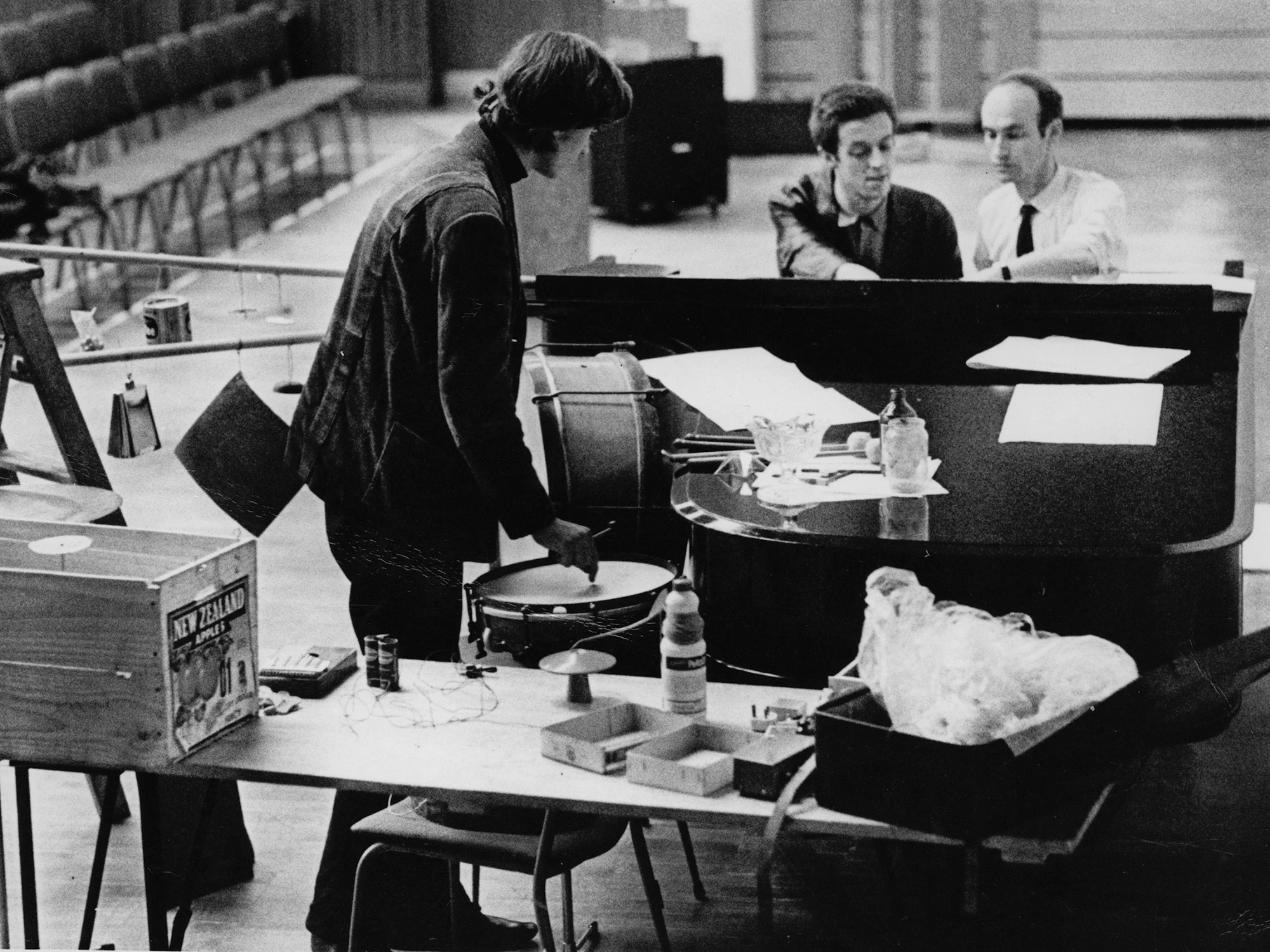
The English composer Cornelius Cardew (1936–1981) was a central figure in the development of experimental music in Britain during the 1960s. Having worked as Karlheinz Stockhausen’s assistant in the late 1950s, Cardew became increasingly interested in the music of John Cage and the possibilities of indeterminate notation. Beginning in 1960, he and pianist John Tilbury organized a series of concerts introducing experimental music to British audiences.
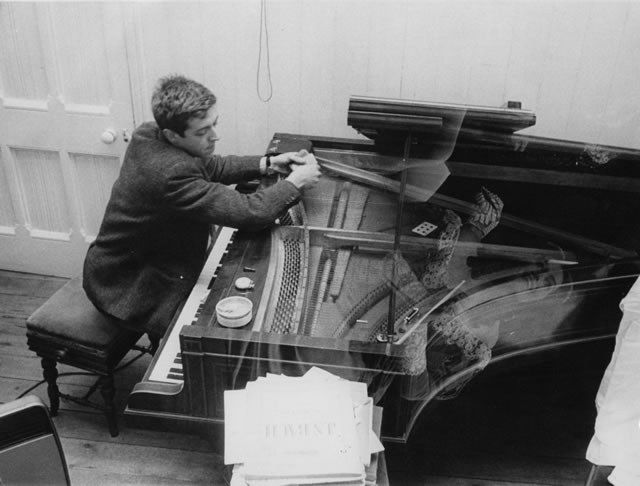
Equally significant was Cardew’s involvement with AMM, whose members Keith Rowe, Lou Gare, Eddie Prévost, and Lawrence Sheaff were developing a distinctive practice of free improvisation. Cardew joined the ensemble in the mid-1960s, an experience he later identified as a turning point in both the composition of Treatise and his understanding of music more broadly. His interest in collective music-making would continue with The Great Learning (1968–71) and the founding of the Scratch Orchestra in 1969.
Composed between 1963 and 1967, Treatise is among the most substantial works of graphic notation to emerge from this period. Its 193 pages consist of an elaborate network of geometric shapes, numbers, lines, and abstracted elements of conventional musical notation. A bold, nearly continuous horizontal line provides a visual point of orientation throughout much of the score, while two empty musical staves appear at the bottom of each page.
The origins of the work lie partly in Cardew’s experience as a graphic designer, where he became interested in the expressive potential of diagrams and the relationships between their constituent elements. In Treatise, these relationships form an extended visual composition independent of any predetermined correspondence to sound. The work specifies neither instrumentation nor duration, and the interpretation of the graphic material is left to the performers.
In a text accompanying a January 1966 BBC broadcast of a section of Treatise, Cardew articulated his understanding of the relationship between the composition and its realization:
What I hope is that in playing this piece each musician will give of his own music—he will give it as his response to my music, which is the score itself.
— Cornelius Cardew, Treatise Handbook, p. x.
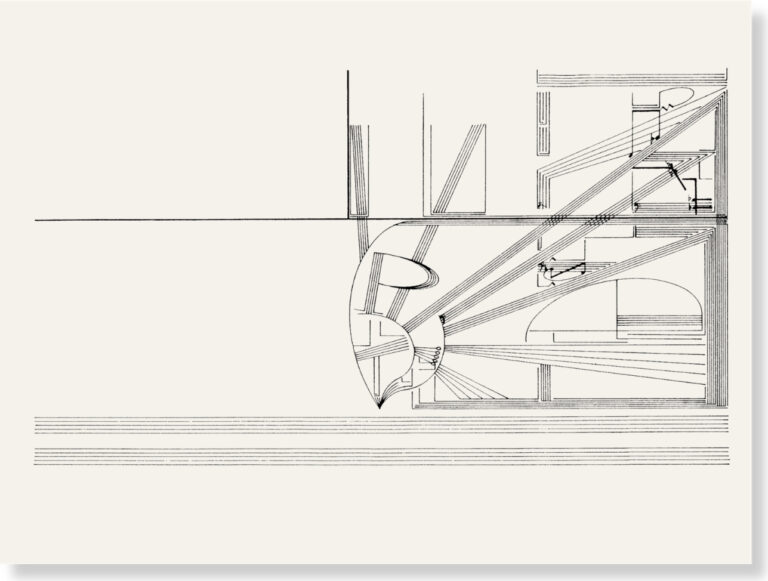
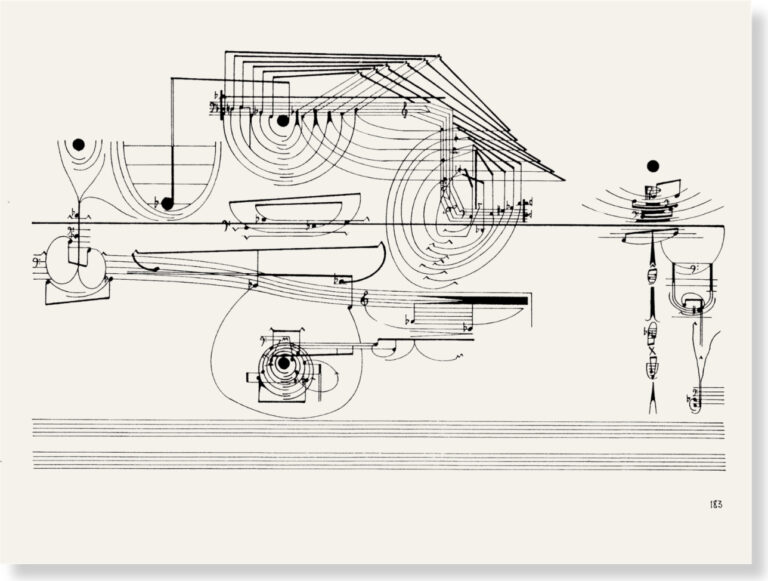
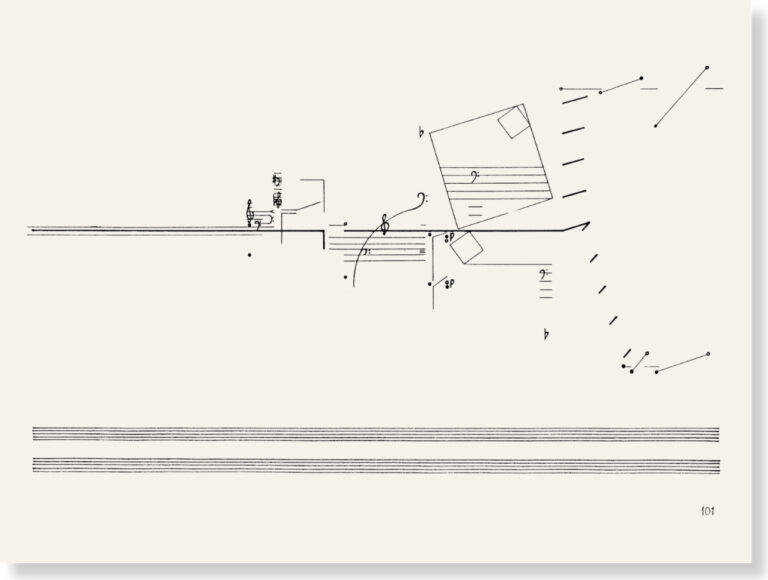
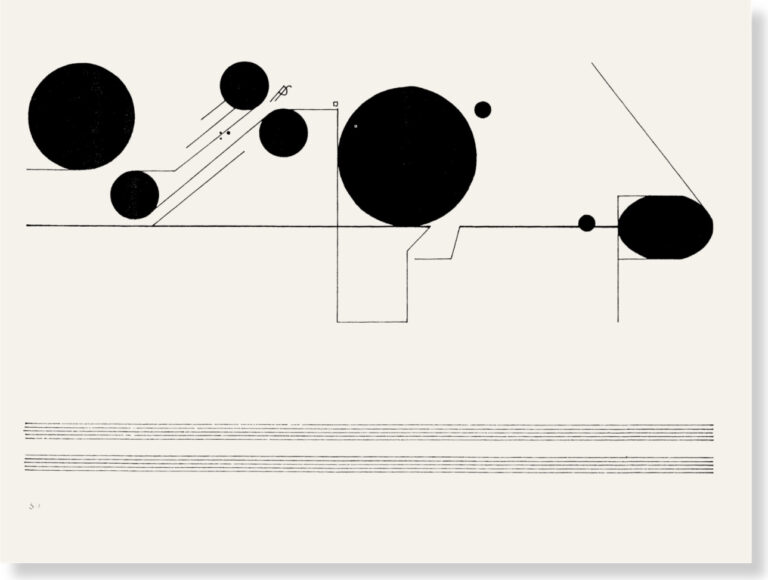
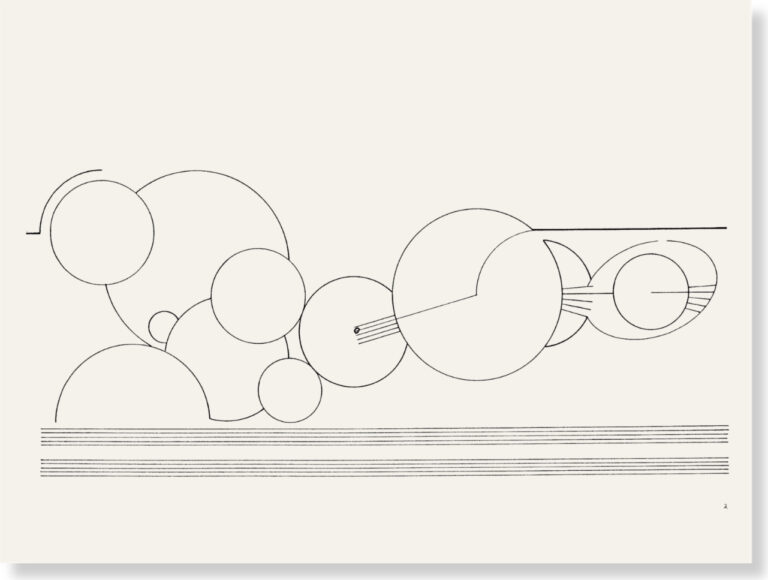
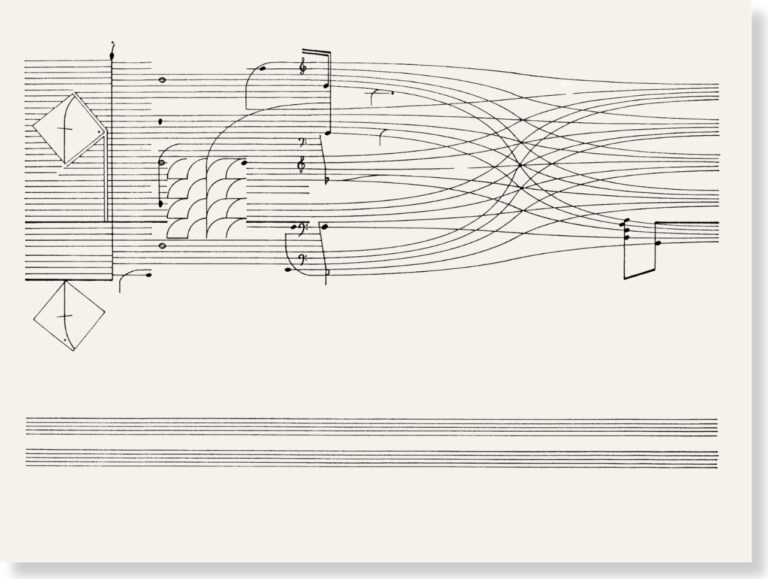
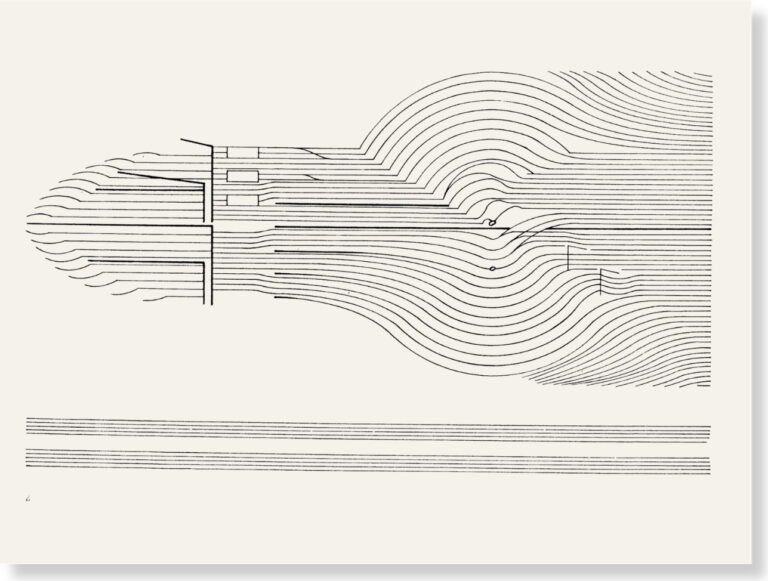
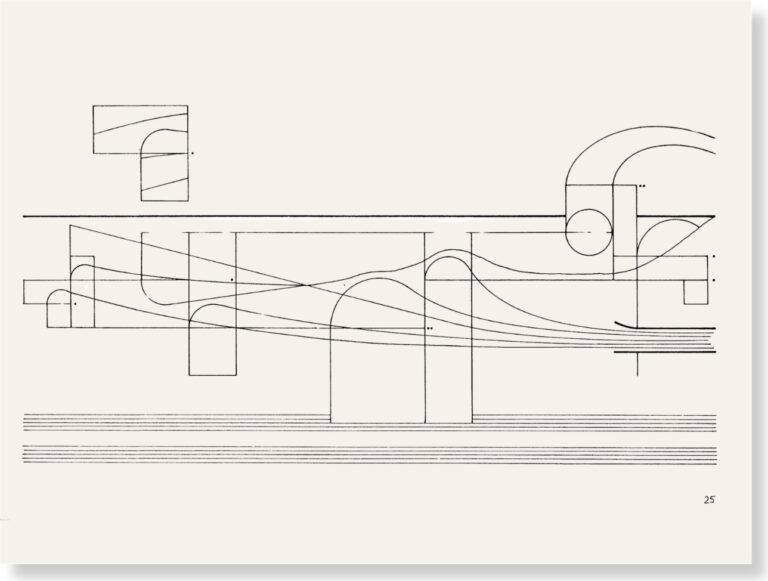
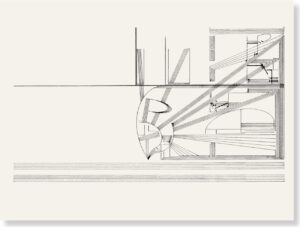
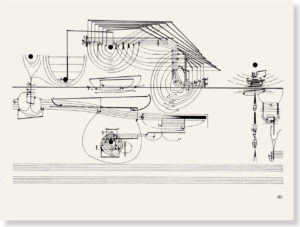
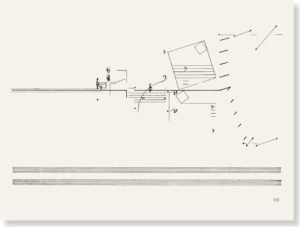
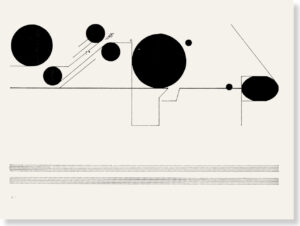
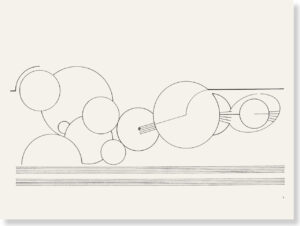
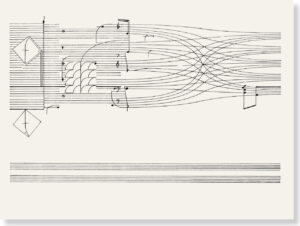
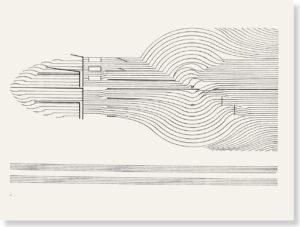
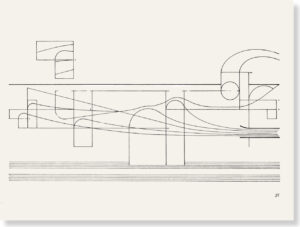
Eight pages from Cornelius Cardew, Treatise (1963–67). Swipe or scroll the strip, or use the thumbnails.
The Treatise Handbook
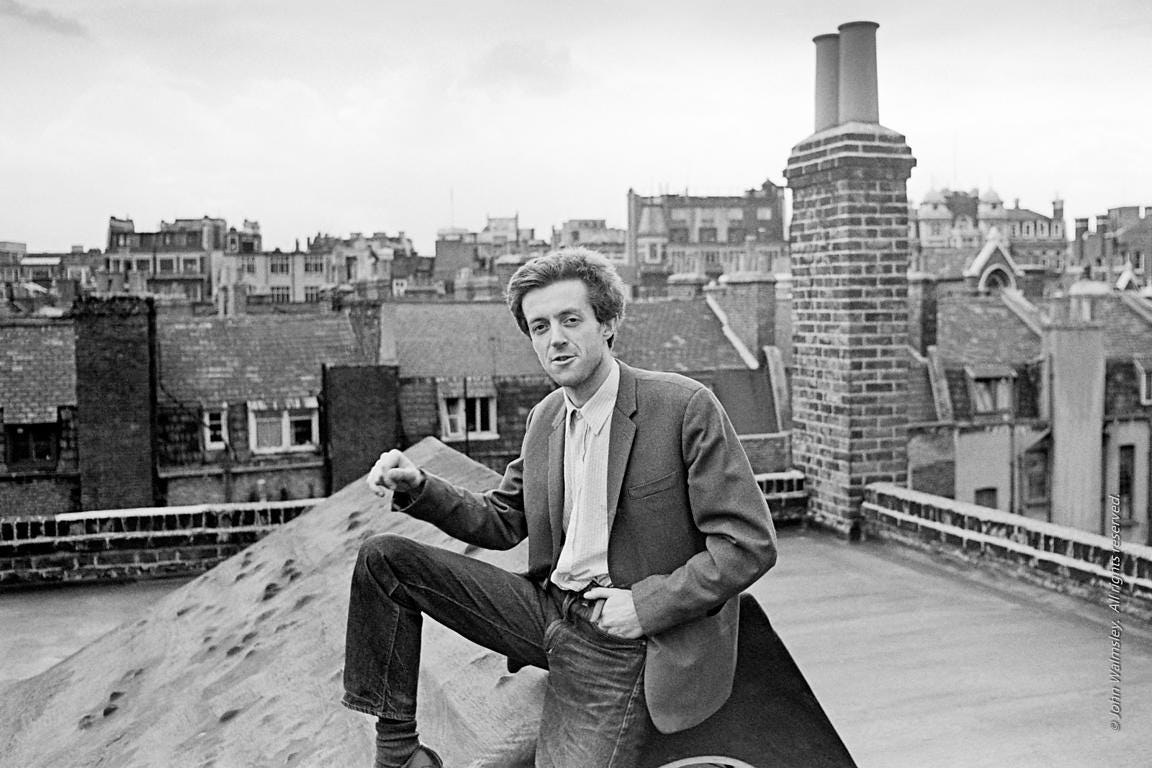
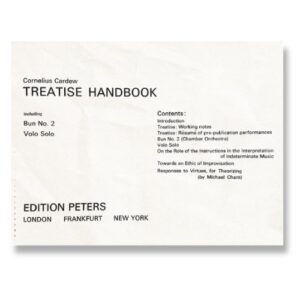
Although Treatise was deliberately published without performance instructions, Cardew subsequently assembled a companion volume, Treatise Handbook, published by Edition Peters in the early 1970s. The Handbook brings together working notes written during the composition of the piece, detailed accounts of early performances, and essays concerning notation and improvisation.
Cardew was reluctant to publish the material, emphasizing that it was not intended to provide a system of interpretation. He also made no attempt to reconcile the contradictions that had emerged in his thinking over the course of the work’s composition.
Nevertheless, the Handbook offers considerable insight into the practical and philosophical questions surrounding the interpretation of Treatise. Given the range of approaches to performing the work, it is worth examining some of the misconceptions that arise in relation to the score and its absence of instructions.
In considering these statements, it is important to distinguish between Cardew’s accounts of actual performances and his working notes, which document an evolving and sometimes contradictory conception of the work.
| Misconception | What Cardew wrote |
|---|---|
| Cardew never wrote anything about how the piece should be performed. | Although the score was deliberately published without instructions, Cardew subsequently published the Treatise Handbook, which contains extensive working notes, accounts of early performances, and examples of possible interpretations. He even prepared provisional instructions for a proposed performance involving trombonists. In the introduction to the Handbook, he acknowledges that sharing his experiences might be useful: “Possibly some errors and misconceptions may thus be avoided.” (p. i) |
| The score can be read in any direction or order. | Cardew conceived of the score as a continuous visual composition with a particular direction and sequence. In his program note for the April 1967 performance, he describes Treatise as “a continuous graphic score of 193 pages to be read in sequence and from left to right.” (p. xiii) Although he frequently performed selected and sometimes nonconsecutive sections, he does not discuss reading the score backward or rearranging its pages. |
| The piece is intended to be performed without a conductor. | Several early performances of Treatise employed conductors, including Cardew himself. In his account of a December 1966 performance, he explains that the instrumentalists “were supposed to turn pages in time with the conductor.” (p. xii) Cardew also directed the first uninterrupted performance of the complete score in April 1967. Conducted and unconducted performances both appear in the Handbook. |
| The horizontal dimension of the score represents time, and the vertical dimension represents pitch. | Cardew did not establish either of these relationships. In his July 1963 working notes, he writes that “space does not correspond literally to time” and that “the vertical space does not necessarily have a constant correspondence in pitch.” (p. iv) In a September 1965 performance, for example, distance from the central horizontal line was interpreted as an indication of loudness rather than pitch. |
| Every graphic element must correspond to a sound. | Cardew considered the possibility that certain elements might serve functions other than the production of sound. In his 1963 working notes, he distinguishes between symbols associated with sounding events and those that provide orientation. He writes: “Bear in mind that parts of the score may be devoid of direct musical relevance.” (p. iv) |
| The score is merely a stimulus for improvisation and need not govern the resulting music. | At least during the early stages of composition, Cardew explicitly rejected this approach. In his 1963 working notes, he writes: “The score must govern the music. It must have authority, and not merely be an arbitrary jumping off point for improvisation, with no internal consistency.” (p. iv) The absence of prescribed musical meanings did not, at this stage in Cardew’s thinking, diminish the importance of the score’s structure. |
All quotations are from Cornelius Cardew’s Treatise Handbook (Edition Peters).
Cardew’s repudiation of Treatise
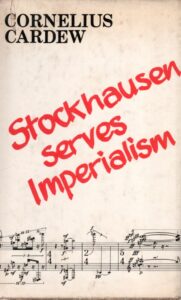
The subsequent history of Treatise is complicated by Cardew’s changing political and aesthetic convictions. By the early 1970s, his commitment to Marxism had led him to reconsider much of his earlier experimental work, as well as the music of Cage and Stockhausen.
In October 1972, at an international symposium on musical notation in Rome, Cardew presented an extensive critique of Treatise under the title Problems of Notation. His objections concerned not only the nature of graphic notation but also the social relationships embodied in its performance. Where he had previously explored the possibilities of a score that granted considerable autonomy to its interpreters, he now questioned the relationship between that activity and the audience.
In performance, the score of Treatise is in fact an obstacle between the musicians and the audience.
Behind that obstacle the musicians improvise, but instead of improvising on the basis of objective reality and communicating something of this to the audience, they preoccupy themselves with that contradictory artefact: the score of Treatise. So not only is Treatise an embodiment of (not only irrelevant but also) incorrect ideas, it also effectively prevents the establishment of communication between the musicians and the audience.
— Cornelius Cardew, Problems of Notation (1972), published in Stockhausen Serves Imperialism (1974), p. 86.
Cardew would subsequently extend his public repudiation of his earlier compositions to The Great Learning, in an article he wrote for a performance in Berlin in March 1974 and handed out to the audience. Both critiques appear in the final chapter of Stockhausen Serves Imperialism, entitled Self-Criticism: Repudiation of Earlier Works.
Despite Cardew’s repudiation, Treatise has remained one of his most enduring works. Nearly sixty years after its completion, it continues to be performed and recorded, attracting successive generations of musicians interested in the relationships between notation, composition, and improvisation.
More on Treatise
Bandcamp Daily traced the piece through its recordings, from the 1967 Prague performance onward.Read it in Bandcamp Daily →
And for Nightingale, Jason Forrest read the score as graphic design, setting it beside the information design of the 1940s and 50s.Read the full piece →